 Escritas.org

Some Poems
Biography
Videos
Books
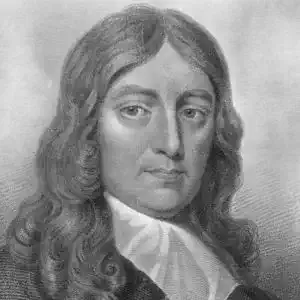
John Milton (9 December 1608 – 8 November 1674)
John Milton was an English poet, polemicist, a scholarly man of letters, and a
civil servant for the Commonwealth (republic) of England under Oliver
Cromwell. He wrote at a time of religious flux and political upheaval, and is
best known for his epic poem Paradise Lost.
Milton's poetry and prose reflect deep personal convictions, a passion for
freedom and self determination, and the urgent issues and political
turbulence of his day. Writing in English, Latin, and Italian, he achieved
international renown within his lifetime, and his celebrated Areopagitica,
(written in condemnation of pre-publication censorship) is among history's
most influential and impassioned defenses of free speech and freedom of the
press.
William Hayley's 1796 biography called him the "greatest English author",
and he remains generally regarded "as one of the preeminent writers in the
English language"; though critical reception has oscillated in the centuries
since his death (often on account of his republicanism). Samuel Johnson
praised Paradise Lost as "a poem which...with respect to design may claim
the first place, and with respect to performance, the second, among the
productions of the human mind". Though Johnson (a Tory and recipient of
royal patronage) described his politics as those of an "acrimonious and surly
republican".
Because of his republicanism, Milton has been the subject of centuries of
British partisanship (a "nonconformist" biography by John Toland, a hostile
account by Anthony à Wood etc.).
Biography
The phases of Milton's life parallel the major historical and political divisions
in Stuart Britain. Under the increasingly personal rule of Charles I and its
breakdown in constitutional confusion and war, Milton studied, travelled,
wrote poetry mostly for private circulation, and launched a career as
pamphleteer and publicist. Under the Commonwealth of England, from being
thought dangerously radical and even heretical, the shift in accepted
attitudes in government placed him in public office, and he even acted as an
official spokesman in certain of his publications. The Restoration of 1660
deprived Milton, now completely blind, of his public platform, but this period
saw him complete most of his major works of poetry.
Milton's views developed from his very extensive reading, as well as travel
and experience, from his student days of the 1620s to the English
Revolution. By the time of his death in 1674, Milton was impoverished and
www.PoemHunter.com - The World's Poetry Archive
on the margins of English intellectual life, yet unrepentant for his political
choices, and of Europe-wide fame.
Early Life
John Milton was born on Bread Street, London, on 9 December 1608, as the
son of the composer John Milton and his wife Sarah Jeffrey. The senior John
Milton (1562–1647) moved to London around 1583 after being disinherited
by his devout Catholic father, Richard Milton, for embracing Protestantism. In
London, the senior John Milton married Sarah Jeffrey (1572–1637), the
poet's mother, and found lasting financial success as a scrivener. He lived in,
and worked from, a house on Bread Street, where the Mermaid Tavern was
located in Cheapside. The elder Milton was noted for his skill as a musical
composer, and this talent left Milton with a lifetime appreciation for music
and friendship with musicians such as Henry Lawes.
Milton's father's prosperity provided his eldest son with a private tutor,
Thomas Young, and then a place at St Paul's School in London. There he
began the study of Latin and Greek, and the classical languages left an
imprint on his poetry in English (he wrote also in Italian and Latin). His first
datable compositions are two psalms done at age 15 at Long Bennington.
One contemporary source is the Brief Lives of John Aubrey, an uneven
compilation including first-hand reports. In the work, Aubrey quotes
Christopher, Milton's younger brother: "When he was young, he studied very
hard and sat up very late, commonly till twelve or one o'clock at night".
Milton matriculated at Christ's College, Cambridge, in 1625 and graduated
with a B.A. in 1629, ranking fourth of 24 honours graduates that year in the
University of Cambridge. Preparing to become an Anglican priest, he stayed
on to obtain his Master of Arts degree on 3 July 1632.
Milton was probably rusticated for quarrelling in his first year with his tutor,
William Chappell. He was certainly at home in the Lent Term 1626; there he
wrote his Elegia Prima, a first Latin elegy, to Charles Diodati, a friend from St
Paul's. Based on remarks of John Aubrey, Chappell "whipt" Milton. This story
is now disputed. Certainly Milton disliked Chappell. Christopher Hill cautiously
notes that Milton was "apparently" rusticated, and that the differences
between Chappell and Milton may have been either religious or personal, as
far as we can know. Another factor, possibly, was the plague, by which
Cambridge was badly affected in 1625. Later in 1626 Milton's tutor was
Nathaniel Tovey.
At Cambridge Milton was on good terms with Edward King, for whom he later
wrote Lycidas. He also befriended Anglo-American dissident and theologian,
Roger Williams. Milton tutored Williams in Hebrew in exchange for lessons in
Dutch. Otherwise at Cambridge he developed a reputation for poetic skill and
general erudition, but experienced alienation from his peers and university
life as a whole. Watching his fellow students attempting comedy upon the
college stage, he later observed 'they thought themselves gallant men, and I
thought them fools'. Milton, due to his hair, which he wore long, and his
general delicacy of manner, was known as the "Lady of Christ's".
Milton was disdainful of the university curriculum, which consisted of stilted
formal debates on abstruse topics, conducted in Latin. His own corpus is not
devoid of humour, notably his sixth prolusion and his epitaphs on the death
of Thomas Hobson. While at Cambridge he wrote a number of his well-known
shorter English poems, among them On the Morning of Christ's Nativity, his
Epitaph on the admirable Dramatick Poet, W. Shakespeare, his first poem to
appear in print, L'Allegro and Il Penseroso.
Study, Poetry, and Travel
Upon receiving his M.A. in 1632, Milton retired to Hammersmith, his father's
new home since the previous year. He also lived at Horton, Berkshire, from
1635 and undertook six years of self-directed private study. Christopher Hill
points out that this was not retreat into a rural or pastoral idyll at all:
Hammersmith was then a "suburban village" falling into the orbit of London,
www.PoemHunter.com - The World's Poetry Archive
and even Horton was becoming deforested, and suffered from the plague. He
read both ancient and modern works of theology, philosophy, history,
politics, literature and science, in preparation for a prospective poetical
career. Milton's intellectual development can be charted via entries in his
commonplace book (like a scrapbook), now in the British Library. As a result
of such intensive study, Milton is considered to be among the most learned of
all English poets; in addition to his years of private study, Milton had
command of Latin, Greek, Hebrew, French, Spanish, and Italian from his
school and undergraduate days; he also added Old English to his linguistic
repertoire in the 1650s while researching his History of Britain, and probably
acquired proficiency in Dutch soon after.
Milton continued to write poetry during this period of study: his Arcades and
Comus were both commissioned for masques composed for noble patrons,
connections of the Egerton family, and performed in 1632 and 1634
respectively. Comus argues for the virtuousness of temperance and chastity.
He contributed his pastoral elegy Lycidas to a memorial collection for one of
his Cambridge classmates. Drafts of these poems are preserved in Milton’s
poetry notebook, known as the Trinity Manuscript because it is now kept at
Trinity College, Cambridge.
In May 1638, Milton embarked upon a tour of France and Italy that lasted up
to July or August 1639. His travels supplemented his study with new and
direct experience of artistic and religious traditions, especially Roman
Catholicism. He met famous theorists and intellectuals of the time, and was
able to display his poetic skills. For specific details of what happened within
Milton's "grand tour", there appears to be just one primary source: Milton's
own Defensio Secunda. Although there are other records, including some
letters and some references in his other prose tracts, the bulk of the
information about the tour comes from a work that, according to Barbara
Lewalski, "was not intended as autobiography but as rhetoric, designed to
emphasise his sterling reputation with the learned of Europe."
In [Florence], which I have always admired above all others because of the
elegance, not just of its tongue, but also of its wit, I lingered for about two
months. There I at once became the friend of many gentlemen eminent in
rank and learning, whose private academies I frequented — a Florentine
institution which deserves great praise not only for promoting humane
studies but also for encouraging friendly intercourse.
– Milton's account of Florence in Defensio Secunda
He first went to Calais, and then on to Paris, riding horseback, with a letter
from diplomat Henry Wotton to ambassador John Scudamore. Through
Scudamore, Milton met Hugo Grotius, a Dutch law philosopher, playwright
and poet. Milton left France soon after this meeting. He travelled south, from
Nice to Genoa, and then to Livorno and Pisa. He reached Florence in July
1638. While there, Milton enjoyed many of the sites and structures of the
city. His candour of manner and erudite neo-Latin poetry earned him friends
in Florentine intellectual circles, and he met the astronomer Galileo, who was
under virtual house arrest at Arcetri, as well as others. Milton probably
visited the Florentine Academy and the Academia della Crusca along with
smaller academies in the area including the Apatisti and the Svogliati.
He left Florence in September to continue to Rome. With the connections
from Florence, Milton was able to have easy access to Rome's intellectual
society. His poetic abilities impressed those like Giovanni Salzilli, who praised
Milton within an epigram. In late October, Milton, despite his dislike for the
Society of Jesus, attended a dinner given by the English College, Rome,
meeting English Catholics who were also guests, theologian Henry Holden
and the poet Patrick Cary. He also attended musical events, including
oratorios, operas and melodramas. Milton left for Naples toward the end of
November, where he stayed only for a month because of the Spanish control.
During that time he was introduced to Giovanni Battista Manso, patron to
both Torquato Tasso and to Giovanni Battista Marino.
Originally Milton wanted to leave Naples in order to travel to Sicily, and then
www.PoemHunter.com - The World's Poetry Archive
on to Greece, but he returned to England during the summer of 1639
because of what he claimed, in Defensio Secunda, were "sad tidings of civil
war in England." Matters became more complicated when Milton received
word that Diodati, his childhood friend, had died. Milton in fact stayed
another seven months on the continent, and spent time at Geneva with
Diodati's uncle after he returned to Rome. In Defensio Secunda, Milton
proclaimed he was warned against a return to Rome because of his frankness
about religion, but he stayed in the city for two months and was able to
experience Carnival and meet Lukas Holste, a Vatican librarian, who guided
Milton through its collection. He was introduced to Cardinal Francesco
Barberini who invited Milton to an opera hosted by the Cardinal. Around
March Milton travelled once again to Florence, staying there for two months,
attending further meetings of the academies, and spent time with friends.
After leaving Florence he travelled through Lucca, Bologna, and Ferrara
before coming to Venice. In Venice Milton was exposed to a model of
Republicanism, later important in his political writings, but he soon found
another model when he travelled to Geneva. From Switzerland, Milton
travelled to Paris and then to Calais before finally arriving back in England in
either July or August 1639.
Civil War, Prose Tracts, and Marriage
On returning to England, where the Bishops' Wars presaged further armed
conflict, Milton began to write prose tracts against episcopacy, in the service
of the Puritan and Parliamentary cause. Milton's first foray into polemics was
Of Reformation touching Church Discipline in England (1641), followed by Of
Prelatical Episcopacy, the two defences of Smectymnuus (a group of
presbyterian divines named from their initials: the "TY" belonged to Milton's
old tutor Thomas Young), and The Reason of Church-Government Urged
against Prelaty. With frequent passages of real eloquence lighting up the
rough controversial style of the period, and deploying a wide knowledge of
church history, he vigorously attacked the High-church party of the Church of
England and their leader, William Laud, Archbishop of Canterbury.
Though supported by his father’s investments, at this time Milton became a
private schoolmaster, educating his nephews and other children of the
well-to-do. This experience, and discussions with educational reformer
Samuel Hartlib, led him to write in 1644 his short tract, Of Education, urging
a reform of the national universities.
In June 1643 Milton paid a visit to the manor house at Forest Hill,
Oxfordshire, and returned with a 16-year-old bride, Mary Powell. A month
later, finding life difficult with the severe 35-year-old schoolmaster and
pamphleteer, Mary returned to her family. Because of the outbreak of the
Civil War, she did not return until 1645; in the meantime her desertion
prompted Milton, over the next three years, to publish a series of pamphlets
arguing for the legality and morality of divorce. (Anna Beer, one of Milton's
most recent biographers, points to a lack of evidence and the dangers of
cynicism in urging that it was not necessarily the case that the private life so
animated the public polemicising.) In 1643 Milton had a brush with the
authorities over these writings, in parallel with Hezekiah Woodward, who had
more trouble. It was the hostile response accorded the divorce tracts that
spurred Milton to write Areopagitica, his celebrated attack on pre-printing
censorship.
Secretary for Foreign Tongues
With the parliamentary victory in the Civil War, Milton used his pen in
defense of the republican principles represented by the Commonwealth. The
Tenure of Kings and Magistrates (1649) defended popular government and
implicitly sanctioned the regicide; Milton’s political reputation got him
appointed Secretary for Foreign Tongues by the Council of State in March
1649. Though Milton's main job description was to compose the English
Republic's foreign correspondence in Latin, he also was called upon to
produce propaganda for the regime and to serve as a censor. In October
1649 he published Eikonoklastes, an explicit defense of the regicide, in
response to the Eikon Basilike, a phenomenal best-seller popularly attributed
www.PoemHunter.com - The World's Poetry Archive
to Charles I that portrayed the King as an innocent Christian martyr. A
month after Milton had tried to break this powerful image of Charles I (the
literal translation of Eikonoklastes is 'the image breaker'), the exiled Charles
II and his party published a defense of monarchy, Defensio Regia Pro Carolo
Primo, written by the leading humanist Claudius Salmasius. By January of
the following year, Milton was ordered to write a defense of the English
people by the Council of State. Given the European audience and the English
Republic's desire to establish diplomatic and cultural legitimacy, Milton
worked more slowly than usual, as he drew on the learning marshalled by his
years of study to compose a riposte. On 24 February 1652 Milton published
his Latin defense of the English People, Defensio Pro Populo Anglicano, also
known as the First Defense. Milton's pure Latin prose and evident learning,
exemplified in the First Defense, quickly made him a European reputation,
and the work ran to numerous editions.
In 1654, in response to an anonymous Royalist tract "Regii sanguinis
clamor", a work that made many personal attacks on Milton, he completed a
second defense of the English nation, Defensio secunda, which praised Oliver
Cromwell, now Lord Protector, while exhorting him to remain true to the
principles of the Revolution. Alexander Morus, to whom Milton wrongly
attributed the Clamor (in fact by Peter du Moulin), published an attack on
Milton, in response to which Milton published the autobiographical Defensio
pro se in 1655. In addition to these literary defenses of the Commonwealth
and his character, Milton continued to translate official correspondence into
Latin. By 1654 Milton had become totally blind, probably due to the onset of
glaucoma. This forced him to dictate his verse and prose to amanuenses
(helpers), one of whom was the poet Andrew Marvell. One of his best-known
sonnets, On His Blindness, is presumed to date from this period.
Family
Milton and Mary Powell (1625–1652) had four children:
Anne (born 7 July 1646)
Mary (born 25 October 1648)
John (16 March 1651 – June 1652)
Deborah (2 May 1652 – ?)
His first wife, Mary Powell, died on 5 May 1652 from complications following
Deborah's birth. Milton's daughters survived to adulthood, but he had always
a strained relationship with them.
On 12 November 1656, Milton was married again, to Katherine Woodcock.
She died on 3 February 1658, less than four months after giving birth to a
daughter, Katherine, who also died.
Milton married for a third time on 24 February 1662, to Elizabeth Mynshull
(1638–1728), the niece of Thomas Mynshull, a wealthy apothecary and
philanthropist in Manchester. Despite a 31-year age gap, the marriage
seemed happy, according to John Aubrey, and was to last more than 11
years until Milton's death. (A plaque on the wall of Mynshull's House in
Manchester describes Elizabeth as Milton's "3rd and Best wife".)
Two nephews, John Phillips and Edward Phillips, were well known as writers.
They were sons of Milton's sister Anne. John acted as a secretary, and
Edward was Milton's first biographer.
The Restoration
Though Cromwell’s death in 1658 caused the English Republic to collapse
into feuding military and political factions, Milton stubbornly clung to the
beliefs that had originally inspired him to write for the Commonwealth. In
1659 he published A Treatise of Civil Power, attacking the concept of a
state-dominated church (the position known as Erastianism), as well as
Considerations touching the likeliest means to remove hirelings, denouncing
corrupt practises in church governance. As the Republic disintegrated, Milton
wrote several proposals to retain a non-monarchical government against the
wishes of parliament, soldiers and the people:
www.PoemHunter.com - The World's Poetry Archive
A Letter to a Friend, Concerning the Ruptures of the Commonwealth, written
in October 1659, was a response to General Lambert's recent dissolution of
the Rump Parliament
Proposals of certain expedients for the preventing of a civil war now feared,
written in November 1659
The Ready and Easy Way to Establishing a Free Commonwealth, in two
editions, responded to General Monck's march towards London to restore the
Long Parliament (which led to the restoration of the monarchy). The work is
an impassioned, bitter, and futile jeremiad damning the English people for
backsliding from the cause of liberty and advocating the establishment of an
authoritarian rule by an oligarchy set up by unelected parliament.
Upon the Restoration in May 1660, Milton went into hiding for his life, while a
warrant was issued for his arrest and his writings burnt. He re-emerged after
a general pardon was issued, but was nevertheless arrested and briefly
imprisoned before influential friends, such as Marvell, now an MP,
intervened. On 24 February 1663 Milton remarried, for a third and final time,
a Wistaston, Cheshire-born woman Elizabeth (Betty) Minshull, then aged 24,
and spent the remaining decade of his life living quietly in London, only
retiring to a cottage – Milton's Cottage – in Chalfont St. Giles, his only extant
home, during the Great Plague of London.
During this period Milton published several minor prose works, such as a
grammar textbook, Art of Logic, and a History of Britain. His only explicitly
political tracts were the 1672 Of True Religion, arguing for toleration (except
for Catholics), and a translation of a Polish tract advocating an elective
monarchy. Both these works were referred to in the Exclusion debate – the
attempt to exclude the heir presumptive, James, Duke of York, from the
throne of England because he was Roman Catholic – that would preoccupy
politics in the 1670s and '80s and precipitate the formation of the Whig party
and the Glorious Revolution.
Milton died of kidney failure on 8 November 1674 and was buried in the
church of St Giles Cripplegate; according to an early biographer, his funeral
was attended by “his learned and great Friends in London, not without a
friendly concourse of the Vulgar.”
Published Poetry
Milton's poetry was slow to see the light of day, at least under his name. His
first published poem was On Shakespear (1630), anonymously included in
the Second Folio edition of Shakespeare. In the midst of the excitement
attending the possibility of establishing a new English government, Milton
collected his work in 1645 Poems. The anonymous edition of Comus was
published in 1637, and the publication of Lycidas in 1638 in Justa Edouardo
King Naufrago was signed J. M. Otherwise the 1645 collection was the only
poetry of his to see print, until Paradise Lost appeared in 1667.
Paradise Lost
Milton’s magnum opus, the blank-verse epic poem Paradise Lost, was
composed by the blind and impoverished Milton from 1658 to 1664 (first
edition) with small but significant revisions published in 1674 (second
edition). As a blind poet, Milton dictated his verse to a series of aides in his
employ. It reflects his personal despair at the failure of the Revolution, yet
affirms an ultimate optimism in human potential. Milton encoded many
references to his unyielding support for the "Good Old Cause".
On 27 April 1667, Milton sold the publication rights to Paradise Lost to
publisher Samuel Simmons for £5, equivalent to approximately £7,400
income in 2008, with a further £5 to be paid if and when each print run of
between 1,300 and 1,500 copies sold out. The first run, a quarto edition
priced at three shillings per copy, was published in August 1667 and sold out
in eighteen months.
www.PoemHunter.com - The World's Poetry Archive
Milton followed up Paradise Lost with its sequel, Paradise Regained,
published alongside the tragedy Samson Agonistes, in 1671. Both these
works also resonate with Milton’s post-Restoration political situation. Just
before his death in 1674, Milton supervised a second edition of Paradise Lost,
accompanied by an explanation of "why the poem rhymes not" and prefatory
verses by Marvell. Milton republished his 1645 Poems in 1673, as well a
collection of his letters and the Latin prolusions from his Cambridge days. A
1668 edition of Paradise Lost, reported to have been Milton's personal copy,
is now housed in the archives of the University of Western Ontario.
Views
An unfinished religious manifesto, De doctrina christiana, probably written by
Milton, lays out many of his heterodox theological views, and was not
discovered and published until 1823. Milton's key beliefs were idiosyncratic,
not those of an identifiable group or faction, and often they go well beyond
the orthodoxy of the time. Their tone, however, stemmed from the Puritan
emphasis on the centrality and inviolability of conscience. He was his own
man, but it is Areopagitica, where he was anticipated by Henry Robinson and
others, that has lasted best of his prose works.
Philosophy
By the late 1650s, Milton was a proponent of monism or animist materialism,
the notion that a single material substance which is "animate, self-active,
and free" composes everything in the universe: from stones and trees and
bodies to minds, souls, angels, and God. Milton devised this position to avoid
the mind-body dualism of Plato and Descartes as well as the mechanistic
determinism of Hobbes. Milton's monism is most notably reflected in Paradise
Lost when he has angels eat and engage in sexual intercourse and the De
Doctrina, where he denies the dual natures of man and argues for a theory
of Creation ex Deo.
Political thought
In his political writing, Milton addressed particular themes at different
periods. The years 1641–42 were dedicated to church politics and the
struggle against episcopacy. After his divorce writings, Areopagitica, and a
gap, he wrote in 1649–54 in the aftermath of the execution of Charles I, and
in polemic justification of the regicide and the existing Parliamentarian
regime. Then in 1659–60 he foresaw the Restoration, and wrote to head it
off.
Milton's own beliefs were in some cases both unpopular and dangerous, and
this was true particularly to his commitment to republicanism. In coming
centuries, Milton would be claimed as an early apostle of liberalism.
According to James Tully:
... with Locke as with Milton, republican and contraction conceptions of
political freedom join hands in common opposition to the disengaged and
passive subjection offered by absolutists such as Hobbes and Robert Filmer.
A friend and ally in the pamphlet wars was Marchamont Nedham. Austin
Woolrych considers that although they were quite close, there is "little real
affinity, beyond a broad republicanism", between their approaches. Blair
Worden remarks that both Milton and Nedham, with others such as Andrew
Marvell and James Harrington, would have taken the problem with the Rump
Parliament to be not the republic, but the fact that it was not a proper
republic. Woolrych speaks of "the gulf between Milton's vision of the
Commonwealth's future and the reality". In the early version of his History of
Britain, begun in 1649, Milton was already writing off the members of the
Long Parliament as incorrigible.
He praised Oliver Cromwell as the Protectorate was set up; though
subsequently he had major reservations. When Cromwell seemed to be
backsliding as a revolutionary, after a couple of years in power, Milton moved
closer to the position of Sir Henry Vane, to whom he wrote a sonnet in 1652.
The group of disaffected republicans included, besides Vane, John Bradshaw,
www.PoemHunter.com - The World's Poetry Archive
John Hutchinson, Edmund Ludlow, Henry Marten, Robert Overton, Edward
Sexby and John Streater; but not Marvell, who remained with Cromwell's
party. Milton had already commended Overton, along with Edmund Whalley
and Bulstrode Whitelocke, in Defensio Secunda. Nigel Smith writes that
... John Streater, and the form of republicanism he stood for, was a
fulfilment of Milton's most optimistic ideas of free speech and of public
heroism
As Richard Cromwell fell from power, he envisaged a step towards a freer
republic or “free commonwealth”, writing in the hope of this outcome in early
1660. Milton had argued for an awkward position, in the Ready and Easy
Way, because he wanted to invoke the Good Old Cause and gain the support
of the republicans, but without offering a democratic solution of any kind. His
proposal, backed by reference (amongst other reasons) to the oligarchical
Dutch and Venetian constitutions, was for a council with perpetual
membership. This attitude cut right across the grain of popular opinion of the
time, which swung decisively behind the restoration of the Stuart monarchy
that took place later in the year. Milton, an associate of and advocate on
behalf of the regicides, was silenced on political matters as Charles II
returned.
Theology
Like many Renaissance artists before him, Milton attempted to integrate
Christian theology with classical modes. In his early poems, the poet narrator
expresses a tension between vice and virtue, the latter invariably related to
Protestantism. In Comus Milton may make ironic use of the Caroline court
masque by elevating notions of purity and virtue over the conventions of
court revelry and superstition. In his later poems, Milton's theological
concerns become more explicit. In 1648 he wrote a hymn How lovely are thy
dwelling fair, a paraphrase of Psalm 84, that explains his view on God.
Milton embraced many heterodox Christian theological views. He rejected the
Trinity, in the belief that the Son was subordinate to the Father, a position
known as Arianism; and his sympathy or curiosity was probably engaged by
Socinianism: in August 1650 he licensed for publication by William Dugard
the Racovian Catechism, based on a non-trinitarian creed. A source has
interpreted him as broadly Protestant, if not always easy to locate in a more
precise religious category.
In his 1641 treatise, Of Reformation, Milton expressed his dislike for
Catholicism and episcopacy, presenting Rome as a modern Babylon, and
bishops as Egyptian taskmasters. These analogies conform to Milton's
puritanical preference for Old Testament imagery. He knew at least four
commentaries on Genesis: those of John Calvin, Paulus Fagius, David Pareus
and Andreus Rivetus.
Through the Interregnum, Milton often presents England, rescued from the
trappings of a worldly monarchy, as an elect nation akin to the Old
Testament Israel, and shows its leader, Oliver Cromwell, as a latter-day
Moses. These views were bound up in Protestant views of the Millennium,
which some sects, such as the Fifth Monarchists predicted would arrive in
England. Milton, however, would later criticise the "worldly" millenarian views
of these and others, and expressed orthodox ideas on the prophecy of the
Four Empires.
The Restoration of the Stuart monarchy in 1660 began a new phase in
Milton's work. In Paradise Lost, Paradise Regained and Samson Agonistes
Milton mourns the end of the godly Commonwealth. The Garden of Eden may
allegorically reflect Milton's view of England's recent Fall from Grace, while
Samson's blindness and captivity – mirroring Milton's own lost sight – may
be a metaphor for England's blind acceptance of Charles II as king.
Illustrated by Paradise Lost is mortalism, the belief that the soul lies dormant
after the body dies.
Despite the Restoration of the monarchy Milton did not lose his personal
www.PoemHunter.com - The World's Poetry Archive
faith; Samson shows how the loss of national salvation did not necessarily
preclude the salvation of the individual, while Paradise Regained expresses
Milton's continuing belief in the promise of Christian salvation through Jesus
Christ.
Though he may have maintained his personal faith in spite of the defeats
suffered by his cause, the Dictionary of National Biography recounts how he
had been alienated from the Church of England by Archbishop William Laud,
and then moved similarly from the Dissenters by their denunciation of
religious tolerance in England.
Milton had come to stand apart from all sects, though apparently finding the
Quakers most congenial. He never went to any religious services in his later
years. When a servant brought back accounts of sermons from
nonconformist meetings, Milton became so sarcastic that the man at last
gave up his place.
Religious Toleration
Milton called in the Aeropagitica for "the liberty to know, to utter, and to
argue freely according to conscience, above all liberties" (applied, however,
only to the conflicting Protestant sects, and not to atheists, Jews, Muslims or
Catholics). "Milton argued for disestablishment as the only effective way of
achieving broad toleration. Rather than force a man's conscience,
government should recognise the persuasive force of the gospel."
Divorce
His thinking on divorce caused him considerable trouble with the authorities.
An orthodox Presbyterian view of the time was that Milton's views on divorce
constituted a one-man heresy:
The fervently Presbyterian Edwards had included Milton’s divorce tracts in his
list in Gangraena of heretical publications that threatened the religious and
moral fabric of the nation; Milton responded by mocking him as “shallow
Edwards” in the satirical sonnet “On the New Forcers of Conscience under the
Long Parliament,” usually dated to the latter half of 1646.
Even here, though, his originality is qualified: Thomas Gataker had already
identified "mutual solace" as a principal goal in marriage. Milton abandoned
his campaign to legitimise divorce after 1645, but he expressed support for
polygamy in the De doctrina christiana, the theological treatise that provides
the clearest evidence for his views.
History
History was particularly important for the political class of the period, and
Lewalski considers that Milton "more than most illustrates" a remark of
Thomas Hobbes on the weight placed at the time on the classical Latin
historical writers Tacitus, Livy, Sallust and Cicero, and their republican
attitudes. Milton himself wrote that "Worthy deeds are not often destitute of
worthy relaters", in Book II of his History of Britain. A sense of history
mattered greatly to him:
The course of human history, the immediate impact of the civil disorders,
and his own traumatic personal life, are all regarded by Milton as typical of
the predicament he describes as "the misery that has bin since Adam".
Legacy and Influence
Once Paradise Lost was published, Milton's stature as epic poet was
immediately recognised. He cast a formidable shadow over English poetry in
the 18th and 19th centuries; he was often judged equal or superior to all
other English poets, including Shakespeare. Very early on, though, he was
championed by Whigs, and decried by Tories: with the regicide Edmund
Ludlow he was claimed as an early Whig, while the High Tory Anglican
minister Luke Milbourne lumped Milton in with other "Agents of Darkness"
www.PoemHunter.com - The World's Poetry Archive
such as John Knox, George Buchanan, Richard Baxter, Algernon Sidney and
John Locke.
Early Reception of The Poetry
John Dryden, an early enthusiast, in 1677 began the trend of describing
Milton as the poet of the sublime. Dryden's The State of Innocence and the
Fall of Man: an Opera (1677) is evidence of an immediate cultural influence.
In 1695, Patrick Hume became the first editor of Paradise Lost, providing an
extensive apparatus of annotation and commentary, particularly chasing
down allusions.
In 1732 the classical scholar Richard Bentley offered a corrected version of
Paradise Lost. Bentley was considered presumptuous, and was attacked in
the following year by Zachary Pearce. Christopher Ricks judges that, as
critic, Bentley was both acute and wrong-headed, and "incorrigibly
eccentric"; William Empson also finds Pearce to be more sympathetic to
Bentley's underlying line of thought than is warranted.
There was an early, partial translation of Paradise Lost into German by
Theodore Haak, and based on that a standard verse translation by Ernest
Gottlieb von Berge. A subsequent prose translation by Johann Jakob Bodmer
was very popular; it influenced Friedrich Gottlieb Klopstock. The
German-language Milton tradition returned to England in the person of the
artist Henry Fuseli.
Many enlightenment thinkers of the 18th century revered and commented on
Milton's poetry and non-poetical works. In addition to John Dryden, among
them were Alexander Pope, Joseph Addison, Thomas Newton, and Samuel
Johnson. For example in The Spectator Joseph Addison wrote extensive
notes, annotations, and interpretations of certain passages of Paradise Lost.
Jonathan Richardson, senior, and Jonathan Richardson, the younger,
co-wrote a book of criticism. In 1749, Thomas Newton published an
extensive edition of Milton's poetical works with annotations provided by
himself, Dryden, Pope, Addison, the Richardsons (father and son) and
others. Newton's edition of Milton was a culmination of the honour bestowed
upon Milton by early Enlightenment thinkers; it may also have been
prompted by Richard Bentley's infamous edition, described above. Samuel
Johnson wrote numerous essays on Paradise Lost, and Milton was included in
his Lives of the Most Eminent English Poets (1779–1781).
Blake
William Blake
considered Milton the major English poet. Blake placed Edmund
Spenser as Milton's precursor, and saw himself as Milton's poetical son.
In his Milton a Poem, Blake uses Milton as a character.
Romantic Theory
Edmund Burke was a theorist of the sublime, and he regarded Milton's
description of Hell as exemplary of sublimity as aesthetic concept. For Burke
it was to set alongside mountain-tops, a storm at sea, and infinity. In The
Beautiful and the Sublime he wrote "No person seems better to have
understood the secret of heightening, or of setting terrible things, if I may
use the expression, in their strongest light, by the force of a judicious
obscurity than Milton."
The Romantic poets valued his exploration of blank verse, but for the most
part rejected his religiosity. William
Wordsworth began his sonnet "London, 1802" with "Milton! thou
should'st be living at this hour" and modelled The Prelude, his own blank
verse epic, on Paradise Lost. John Keats found the
yoke of Milton's style uncongenial; he exclaimed that "Miltonic verse cannot
www.PoemHunter.com - The World's Poetry Archive
be written but in an artful or rather artist's humour." Keats felt that Paradise
Lost was a "beautiful and grand curiosity"; but his own unfinished attempt at
epic poetry, Hyperion, was unsatisfactory to the author because, amongst
other things, it had too many "Miltonic inversions". In The Madwoman in the
Attic, Sandra Gilbert and Susan Gubar note that Mary Shelley's novel
Frankenstein is, in the view of many critics, "one of the key 'Romantic'
readings of Paradise Lost."
Later Legacy
The Victorian age witnessed a continuation of Milton's influence, George Eliot
and Thomas Hardy being particularly inspired by Milton's poetry and
biography. By contrast, the early 20th century, with the efforts of T. S. Eliot
and Ezra Pound, witnessed a reduction in Milton's critical stature. Harold
Bloom, in The Anxiety of Influence, could still write that "Milton is the central
problem in any theory and history of poetic influence in English [...]".
Milton's Areopagitica is still cited as relevant to the First Amendment to the
United States Constitution. A quotation from Areopagitica – "A good book is
the precious lifeblood of a master spirit, embalmed and treasured up on
purpose to a life beyond life" – is displayed in many public libraries, including
the New York Public Library.
The title of Philip Pullman's His Dark Materials trilogy is derived from a
quotation, "His dark materials to create more worlds", line 915 of Book II in
Paradise Lost. Pullman was concerned to produce a version of Milton's poem
accessible to teenagers, and has spoken of Milton as "our greatest public
poet".
T. S.
Eliot believed that "of no other poet is it so difficult to consider the
poetry simply as poetry, without our theological and political dispositions...
making unlawful entry".
Literary Legacy
Milton's use of blank verse, in addition to his stylistic innovations (such as
grandiloquence of voice and vision, peculiar diction and phraseology)
influenced later poets. At the time poetic blank verse was considered distinct
from its use in verse drama, and Paradise Lost was taken as a unique
examplar. Said Isaac Watts in 1734, "Mr. Milton is esteemed the parent and
author of blank verse among us". "Miltonic verse" might be synonymous for
a century with blank verse as poetry, a new poetic terrain independent from
both the drama and the heroic couplet.
Lack of rhyme was sometimes taken as Milton's defining innovation. He
himself considered the rhymeless quality of Paradise Lost to be an extension
of his own personal liberty:
This neglect then of Rhime ... is to be esteem'd an example set, the first in
English, of ancient liberty recover'd to heroic Poem from the troublesom and
modern bondage of Rimeing.
This pursuit of freedom was largely a reaction against conservative values
entrenched within the rigid heroic couplet. Within a dominant culture that
stressed elegance and finish, he granted primacy to freedom, breadth and
imaginative suggestiveness, eventually developed into the romantic vision of
sublime terror. Reaction to Milton’s poetic worldview included, grudgingly,
acknowledgement that of poet’s resemblance to classical writers (Greek and
Roman poetry being unrhymed. Blank verse came to be a recognised
medium for religious works and for translations of the classics. Unrhymed
lyrics like Collins' Ode to Evening (in the meter of Milton's translation of
Horace's Ode to Pyrrha) were not uncommon after 1740.
A second aspect of Milton's blank verse was the use of unconventional
rhythm:
www.PoemHunter.com - The World's Poetry Archive
His blank-verse paragraph, and his audacious and victorious attempt to
combine blank and rhymed verse with paragraphic effect in Lycidas, lay
down indestructible models and patterns of English verse-rhythm, as
distinguished from the narrower and more strait-laced forms of English
metre.
Before Milton, "the sense of regular rhythm ... had been knocked into the
English head so securely that it was part of their nature". The "Heroick
measure", according to Samuel Johnson, "is pure ... when the accent rests
upon every second syllable through the whole line The repetition of this
sound or percussion at equal times, is the most complete harmony of which
a single verse is capable", Caesural pauses, most agreed, were best placed
at the middle and the end of the line. In order to support this symmetry,
lines were most often octo- or deca-syllabic, with no enjambed endings. To
this schema Milton introduced modifications, which included hypermetrical
syllables (trisyllabic feet), inversion or slighting of stresses, and the shifting
of pauses to all parts of the line. Milton deemed these features to be
reflective of "the transcendental union of order and freedom". Admirers
remained hesitant to adopt such departures from traditional metrical
schemes: "The English ... had been writing separate lines for so long that
they could not rid themselves of the habit”. Isaac Watts preferred his lines
distinct from each other, as did Oliver Goldsmith, Henry Pemberton, and
Scott of Amwell, whose general opinion it was that Milton's frequent omission
of the initial unaccented foot was "displeasing to a nice ear". It was not until
the late 18th century that poets (beginning with Gray) began to appreciate
"the composition of Milton's harmony ... how he loved to vary his pauses, his
measures, and his feet, which gives that enchanting air of freedom and
wilderness to his versification".
While neo-classical diction was as restrictive as its prosody, and narrow
imagery paired with uniformity of sentence structure resulted in a small set
of 800 nouns circumscribing the vocabulary of 90% of heroic couplets ever
written up to the eighteenth century, and tradition required that the same
adjectives attach to the same nouns, followed by the same verbs, Milton's
pursuit of liberty extended into his vocabulary as well. It included many
Latinate neologisms, as well as obsolete words already dropped from popular
usage so completely that their meanings were no longer understood. In 1740
Francis Peck identified some examples of Milton's "old" words (now popular).
The “Miltonian dialect” as it was called, was emulated by later poets; Pope
used the diction of Paradise Lost in his Homer translation, while the lyric
poetry of Gray and Collins was frequently criticised for their use of “obsolete
words out of Spenser and Milton”. The language of Thomson’s finest poems
(e.g. The Seasons, Castle of Indolence) was self-consciously modelled after
the Miltonian dialect, with the same tone and sensibilities as Paradise Lost.
Following to Milton, English poetry from Pope to John Keats exhibited a
steadily increasing attention to the connotative, the imaginative and poetic,
value of words.
Miltonic Effects
The varied manifestations of personal liberty in Milton's works (e.g.
abandonment of rhyme, irregular rhythms, peculiar diction) converge to
create specific Miltonian effects that live on to this day. Raymond Dexter
identifies nine outstanding characteristics specific to Paradise Lost that
survived into later poetic movements:
1. Dignity, reserve and stateliness
Of Man's first disobedience, and the fruit
Of that forbidden Tree, whose mortal taste
Brought death into the world, and all our woe,
With loss of Eden, till one greater Man
Restore us, and regain the blissful seat,
Sing, Heavenly Muse (i. 1–6)
2. Sonorous, orotund voice
www.PoemHunter.com - The World's Poetry Archive
O thou that, with surpassing glory crown'd
Look'st from thy sole dominion like the god
Of this new World. (iv. 32-4)
3. Inversion of the natural order of words and phrases
Ten paces huge
He back recoil’d. (vi. 193-4)
"temperate vapours bland"(v. 5)
"heavenly form Angelic"(ix. 457-8)
"unvoyageable gulf obscure"(x. 366)
4. The omission of words not necessary to the sense
And where their weakness, how attempted best,
By force or subtlety. (ii. 357-8)
5. Parenthesis and opposition
Their song was partial, but the harmony
(What could it less when Spirits immortal sing?)
Suspended Hell, and took with ravishment
The thronging audience. In discourse more sweet
(For eloquence the soul, song charms the sense)
Others apart sat on a hill retired (ii. 552-7)
6. The use of one part of speech for another
"with gems . . . rich emblazed", "grinned horrible", (adjective used as
adverb)
"Heaven's azure" or "the vast of Heaven". (adjective used as noun)
"without disturb they took alarm"; "the place of her retire." (verbs used as
nouns )
May serve to better us and worse our foes (adjective used as verb)
Yet oft his heart, divine of something ill (verb, adjective employed in
participal sense)
"fuell'd entrails," "his con-sorted Eve," "roses bushing round." (substantive
used as verb).
7. Vocabulary
Archaic words from Chaucer, Spenser and Shakespeare: "erst," "grunsel,"
"welkin," "frore," "lore," "grisly," "ken" etc. Unusual Words from Greek or
Latin: "dulcet," "panoplie," "sapience," "nocent," "congratulant” etc. Words
employed in senses obsolete to the eighteenth century: "the secret top Of
Oreb," "a singèd bottom all in-volved With stench," "tempt an abyss,” "his
uncouth way"
8. The introduction into a comparatively short passage of proper names in
number, not necessary to the sense, but adding richness, color, and
imaginative suggestiveness
And what resounds
In fable or romance of Uther's son,
Begirt with British and Armoric knights;
And all who since, baptised or infidel,
jousted in Aspramont, or Montalban,
Damasco, or Marocco, or Trebisond;
Or whom Biserta sent from Afric shore
When Charlemain with all his peerage fell
By Fontarabbia. (i. 579-87)
9. Unusual compound epithets
"Sail-broad vans," "high-climbing hill," "arch-chemic sun," "half-rounding
guards," "night-warbling bird," "love-labour'd song"
www.PoemHunter.com - The World's Poetry Archive
Works:
Poetic and dramatic works
1631: L'Allegro
1631: Il Penseroso
1634: A Mask Presented at Ludlow Castle, 1634 commonly known as Comus
(a masque)
1638: Lycidas
1645: Poems of Mr John Milton, Both English and Latin
1655: On the Late Massacre in Piedmont
1667: Paradise Lost
1671: Paradise Regained
1671: Samson Agonistes
1673: Poems, &c, Upon Several Occasions
Political, philosophical and religious prose
Of Reformation (1641)
Of Prelatical Episcopacy (1641)
Animadversions (1641)
The Reason of Church-Government Urged against Prelaty (1642)
Apology for Smectymnuus (1642)
Doctrine and Discipline of Divorce (1643)
Judgement of Martin Bucer Concerning Divorce (1644)
Of Education (1644)
Areopagitica (1644)
Tetrachordon (1645)
Colasterion (1645)
The Tenure of Kings and Magistrates (1649)
Eikonoklastes (1649)
Defensio pro Populo Anglicano [First Defence] (1651)
Defensio Secunda [Second Defence] (1654)
A treatise of Civil Power (1659)
The Likeliest Means to Remove Hirelings from the Church (1659)
The Ready and Easy Way to Establish a Free Commonwealth (1660)
Brief Notes Upon a Late Sermon (1660)
Accedence Commenced Grammar (1669)
History of Britain (1670)
Artis logicae plenior institutio [Art of Logic] (1672)
Of True Religion (1673)
Epistolae Familiaries (1674)
Prolusiones (1674)
A brief History of Moscovia, and other less known Countries lying Eastward of
Russia as far as Cathay, gathered from the writings of several Eye-witnesses
(1682)
De Doctrina Christiana (1823)
www.PoemHunter.com - The World's Poetry Archive
John Milton documentary
John Milton in Hindi
Why Is John Milton's Poem "Paradise Lost" So Famous? | Literary Classics | Perspective
John Milton hipnotizando a Paco Maya, Christian Meza, Yami Cortez, Luis Coria y Cuervo (yo de mirón)
JOHN MILTON CULIACÁN 2023
Paradise Lost by John Milton | Summary & Analysis
Paradise Lost by John Milton | Plot Summary
Hell and Heaven Within Us | Paradise Lost & John Milton's Metaphysical Philosophy of Happiness
John Milton habla de la hipnosis en el deporte y cómo ayudó a Tigres
La realidad sobre la hipnosis - John Milton Entrevista con Nayo Escobar
English Literature | John Milton: life, workshop and political activity | English Literature Lessons
Franco Escamilla.- John Milton hipnotizando a la DiabloSquad
John Milton | E@6 Videopedia | TES | Kalyani Vallath | NTA NET, K SET, G SET, WB SET, GATE, J SET
John Milton Anaheim
¿Cómo Hipnotizarte Para El Éxito? | Andrés Garza X John Milton | EP. #09
Paradise Lost by John Milton | Book 1 Summary & Analysis
JOHN MILTON LIFE AND WORKS COMPLETE REVISION || LITERATURE LOVERS || AKSRAJVEER
1. Introduction: Milton, Power, and the Power of Milton
🔴JOHN MILTON | BEST 100- EXAM POINTS
John Milton, Biography
EL MIEDO A PERDER EL CONTROL | JOHN MILTON | Miro de Atrás #07
Tirando Bola Episodio especial (No canon jajajajaj) con John Milton
PARADISE LOST by John Milton - FULL AudioBook | Greatest AudioBooks V1
JOHN MILTON nos hipnotiza para AYUDARNOS con PROBLEMAS DE SALUD | en vivo
John Milton's "Lycidas" | Close Reading, Analysis & Critical Appreciation
The Used - Paradise Lost, a poem by John Milton [Official Music Video]
John Milton - Paradise Lost
CREATIVO #277 - JOHN MILTON | ¿La hipnosis es real?, Cómo hipnotizar, Curar cáncer con respiraciones
Armando Iannucci in Milton's Heaven and Hell BBC 2 (2009)
Paradise Lost by John Milton | Characters
Paraíso Reconquistado (John Milton) | Tatiana Feltrin
A guerra no Céu | Paraíso Perdido (John Milton) | Livro I a IV
John Milton: EL MUNDO de la HIPNOSIS y EL MENTALISMO | Pepe's Office
JOHN MILTON nos hipnotiza para BAJAR DE PESO | BIG&FASHION
Lycidas : Poem by John Milton in Hindi
John Milton - Hipnotizando Gente - Teatro Galerías (13 - Jul - 2023)
Letteratura Inglese | John Milton (parte 1): vita, opere e attività politica
Analysis of Paradise Lost by John Milton: Book 9
John Milton TOP 100 MCQ || UP TGT PGT English 2022
John Milton quiere conocer a los Extraterrestres
Richard Strier on Milton's Paradise Lost
JOHN MILTON Selected Questions || पढ़ लीजिये अभी मौका है
John Milton 1
John Milton ||Biography ||John Milton Works || Quotations||Important Questions
John Milton: Paradise Lost
JOHN MILTON NOS HIPNOTIZA 😴
Hipnosis financiera con John Milton | Dimes y Billetes #165 | Moris Dieck
¡JOHN MILTON ME HIPNOTIZÓ🌀Y ME CONVERTI EN EL HOMBRE ARAÑA!🕷
Paradise Lost | Puritan and Restoration Age | Lecture 1 #paradiselost #johnmilton
Great Books: Paradise Lost, by John Milton